SHOULD BABIES and TODDLERS WATCH TELEVISION?
by Elizabeth Pantley
So much television programming is aimed at young children. Much of it appears to be educational: teaching the ABC's and life skills. When is it appropriate to introduce a baby to television, and what do parents need to know about this topic?
A great deal of research has been done on the effects of television on children’s lives. The first step in making the decision is to get the facts. Because nearly all of us have one or more TV sets in our home, and since most of us watch some TV nearly every day, we may not want to hear what research tells us, but these are things parents need to know.
- Experts suspect that babies younger than two years old view TV as a confusing array of colors, images, and noises. They don’t understand much of the content. Since the average TV scene lasts five to eight seconds, your baby or toddler doesn’t have enough time to digest what’s happening.
- Cartoons and many children’s shows are filled with images of violence. If you find this hard to believe, surf the TV on Saturday morning. The realism portrayed in today’s cartoons has moved light years beyond the Bugs Bunny type of violence. Many children’s shows almost are animated versions of adult action films. Research shows that exposure to this type of programming increases the risk of aggressive behavior and desensitizes children to violence.
- Babies and toddlers have a very literal view of the world. They can’t yet tell the difference between real and pretend, and they interpret what they see on TV as true life. Research has demonstrated that many young children believe that TV characters actually live inside the TV set. This can confuse young children’s understanding of the world and get in the way of their learning what’s right or wrong. It can paint a picture of a frightening, unstable, and bewildering world - and your little one does not yet have the faculties to put what he sees into proper perspective.
- Television watching can be addictive. The more that children watch, the more they want to watch. Even toddlers can become drawn to the set. Once addicted, turning off the TV can become a daily battle. Children who watch TV excessively often become passive and lose their natural creativity; they eventually have a hard time keeping themselves busy, and they lose valuable time that should be dedicated to “play” ¾ the foundation of a healthy childhood and the primary way that very young children learn.
- Parents sometimes unwittingly begin to use TV more and more as a way to keep their children happy and quiet. It takes a strong will and dedication to avoid the easy route provided by this free and easy and yet sometimes dangerous babysitter.
- Children experience unparalleled physical, mental, and emotional growth in the early years of life. Time spent watching television is time taken away from more healthful activities that nurture growth and development.
- Children who watch a lot of television during their early years are at risk for childhood obesity, poor social development, and aggressive behavior. They often have trouble adjusting to preschool or kindergarten. According to a study by Yale Family Television Research, teachers characterized children who watched excessive television as less cooperative, less imaginative, less enthusiastic about learning, and less happy than those who watched little or no TV.
- Due to all the above reasons, the American Academy of Pediatrics (AAP) recommends that parents not allow children under two to watch any television.
You may have noticed that all of these points demonstrate the negative aspects of letting babies and toddlers watch TV, and you’re wondering if there are any positives. There are a few, but I’ll be honest: I had to be very creative to come up with this list, since published research doesn’t demonstrate many good points for putting a young child in front of a television. But we need to be realistic and acknowledge that most of us aren’t going to put our TVs in the closet until all of our children start school. Here are some of the good points of television for children:
- Quality children’s programming can teach your child basic academic skills, such as the ABCs, counting, addition, science fundamentals, basic language skills, manners, and even early reading skills.
- Your child can view things she might not otherwise see in daily life: exotic animals, distant lands, musical instruments, historical places, and diverse lifestyles. Your child can learn about the world beyond her home and neighborhood.
- Your child can learn basic social skills from watching wholesome programming: how to play with other children, how to use good manners.
- Using extraordinarily careful selection and restraint, a little bit of television can provide a parent with much-needed down time, or time to catch up on tasks that need adult-only attention.
TV watching tips for parents of babies and young children
The following tips may help you minimize the negative and maximize the positive effects of television watching for your little one:
- Hold off introducing television, even videos to your baby as long as possible. If you wait until your child’s second birthday, you can consider yourself incredibly successful in starting your little one off well and with the kind of real-life interaction that is so important for his development. If you decide to allow TV before your child turns two, choose programming carefully, limit viewing time and skip days when possible. (Daily viewing easily becomes habit.) The less watching time, the better! Set a goal, such as no more than 30 minutes or an hour per day, or one favorite show, so that you’ll not be tempted to turn the TV on too frequently.
- Watch programs yourself before you allow your baby or toddler to watch them. Just because a network markets a show to young children doesn’t mean it will reflect your own family’s morals and values. You will be amazed to discover that many programs aimed at children contain violence or topics that are inappropriate for your child. Don’t assume that your baby can pick out the moral message from a program that features violence or conflict on the way to an important lesson.
- Pay attention to commercials - surprisingly, an excellent children’s show will sometimes feature commercials that depict the exact things you don’t want your little one to see!
- Choose programs that are developmentally appropriate for your child. For you, this means shows that are slow, boring, and probably somewhat goofy. But choose programs from your child’s perspective, not your own.
- Invest in a collection of appropriate and educational videos for your child so that you won’t be confined to network programming schedules when you are ready to let your little one watch something.
- Watch along with your child when you can so that you can monitor your child’s reactions to what he’s seeing. Invite questions and discuss what you are watching so that you can understand your little one’s take. Point things out and talk about what is being taught to get the most of out of educational TV. You may even follow up with some lessons afterwards.
- Avoid keeping the TV on when no one is actively watching. Many people do this and are used to the background noise the set generates, but your child will almost surely be exposed to programming that is inappropriate for her.
- Make a conscious decision about how you will use television in your family; don’t watch it by accident or default.
This article is a copyrighted excerpt from Gentle Baby Care by Elizabeth Pantley. (McGraw-Hill, 2003)
Comments for SHOULD BABIES and TODDLERS WATCH TELEVISION?
|
||
|
||
|
||
|
||
|
||

More From TTT


-
Gingerbread House
Jan 07, 22 02:46 PM
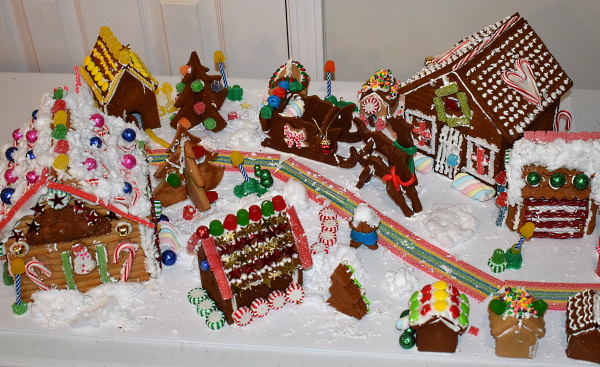 Construction Gingerbread Recipe for Parties and an Easy One for Kids in the Classroom
 -
Home Lunch Ideas for Kids
Sep 16, 21 11:18 AM
 Home lunch and Snack Ideas for Kids
 -
Chinese Zodiac Animals
May 18, 21 06:03 PM
 Chinese Zodiac Animals made from colorful construction paper strips


| Homepage | Return To Top |
| Contact Us | About Us | Sitemap | Privacy Policy |Disclaimer |

Copyright© 2008-2015 teaching-tiny-tots.com.
