Got Play? The Loss of Children’s Free-Play in America Part 1
by Jc Boushh
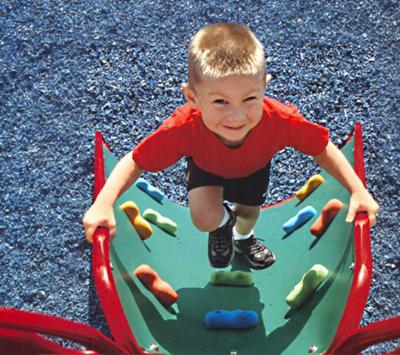
Fears of injury and litigation have led to a decline in free-play for children, with consequences that are profound and a growing crisis that threatens children’s health, fitness, & development. Play is important, but to define the concept of play is perhaps as difficult as defining love, hate, or attraction. Play Wales, an organization dedicated to preserving children’s free-play defines play as;
“Freely Chosen, Personally Directed, and Intrinsically Motivated. Freely chosen means that children themselves choose when, how and what to play. As such it is not part of a set program and does not have any steps that need to be completed. Personally directed means children themselves decide the rules and roles they take within their play. And finally, Intrinsically motivated means that play is undertaken for its own sake, and not performed for any reward, certificate or status.” (para. 2).
The general rule of free-play is that children need to freely choose their play activities; it should not be adult directed, and it is not a structured activity like organized sporting events, which are very different from free-play. Scientists who study play, in animals and humans alike, are developing a consensus view that play is something more than a way for restless kids to work off steam; more than a way for overweight children to burn off calories; more than a frivolous luxury. Play, in their view, is a central part of neurological, emotional, physical, and cognitive growth and development in children and adults.
The loss or decline in children’s free-play can be attributed to parent’s and administrator’s anxiety of injury and danger. Mary Rivkin author of The great outdoors: Restoring children's right to play outdoors wrote of the loss of play;
"Children's access to outdoor play has evaporated like water in sunshine" (2).
Parents are not only more anxious about their children being a victim of crime or a fatal accident; they are also anxious about bullying and academic struggles. This parental fear has been transmitted to the schools and child care centers. One of the greatest concerns for all educators and child care professionals is the fear of litigation, which is partly to blame for schools banning recess and outdoor play. Peter J. McDonnell, MD,
Director of the Wilmer Eye Institute at the Johns Hopkins University School of Medicine states; “Today, our society seems to believe there should be no risks; the corollary of this belief is that if something untoward occurs, someone must be forced to pay. … If a child falls off a swing at the park and hurts him or herself, the city must pay. In a previous town where I lived in California, city parks were actually being closed because the city could no longer obtain insurance against playground lawsuits.” (45).
Free-play in essence has become a dirty word and a liability. Parents and administrators see play as a luxury that kids, as well as adults, could do without. This devaluing of free-play may have startling consequences on children’s health and well being and their future development as adults.
Play deprivation may have the effect of gradually dehumanizing the children it affects, with a consequent loss of their ability to care, to empathize and exercise compassion, or share the same reality as other children. The available evidence suggests that play deprived children become disturbed, aggressive and violent adults. Dr Stuart Brown of the National Institute for Play describes play deprivation as;
“a kind of emotional and multisensory starvation. We see the tragic evidence of it in the neglected orphans in Romania and Serbia. Remember, we’re also primates. When we’re deprived of play, we’ll suffer in ways similar to the way those laboratory animals suffered. Play is part of our original equipment, but it has to be nurtured to develop. Normally we play. When we don’t, something has gone very, very, wrong, and nonplayers will suffer a number of effects.” (403).
The lack of sufficient free-play may be a cause of the impulse control problem we label ADHD. Hara Marona-NRPA National Congress 2008 states that;
“Rough and tumble play may be the very specific solution for the puzzle of the sudden explosion in diagnosis of ADHD.”
The protectionism that takes all the risk out of life for kids presumes kids are frail and fragile. It assumes that kids are easily bruised, and in itself becomes a self-fulfilling prophecy.
The effect of the fear about play is no more prevalent than the protectionism of everyday parents and administrators, and their misconceptions of how children may become injured or the liability created by children’s injuries during free-play. Play is no longer viewed as a viable part of the school schedule, but instead it is viewed as simply a liability that a school can no longer sustain. Meryl Hymann Harris of Safe Playgrounds states;
“The National Parent Teacher Association advises local PTAs against buying playground equipment for schools due to their potential liability.”
Chris Kahn, in “In Pursuit of Safety, Teeter-Totters and Swings Are Disappearing from Playgrounds” writes regarding schools view of play and the liability involved with it;
“After paying $561,000 to settle 189 claims over five years for playground accidents, Broward County, FL, schools install signs at all 137 of their elementary schools advising children not to, among other things, run while on the playground.”
The cumulative impact of parent’s and administrator’s obsession with litigation, injuries, and fear that children will be assaulted or kidnapped sends an unconscious message to children that children’s free-play is unwelcome, and that structured sports activities are the only safe form of outdoor recreation. Sociologist writes about the phenomenon of ‘paranoid parenting’;
“The cultural absorption of fear whereby parents believe they are responsible adults only if they observe their children all the time. Told incessantly to be mindful of lurking dangers and the people who might inhabit the outdoors, these parents often defer trips to public spaces. Going to a playground becomes too exhausting for a parent to contemplate.” (Louv).
This almost obsessive compulsion with the safety of children has a deep detrimental effect upon today’s children. Children today are breaking down in record numbers, childhood obesity is at epidemic proportions, children are being prescribed mood altering and behavior inducing medications daily, and today’s children are becoming a nation of wimps. Research is showing us that free-play is vital to healthy human development from birth to death. Dr. Joe L. Frost, Parker Centennial Professor Emeritus at The University of Texas in Austin, states
“‘Play is one of children’s chief vehicles for development.’ … ‘Right now it looks like we’re developing a nation of wimps.’ (Kahn).
Free-play not only plays a vital role in the cognitive and emotional development of children it is also one of the answers to the national epidemic of childhood obesity. Play is the chief way to get children outside and active. Leslie Walker, MD, pediatrician at Georgetown University Hospital believes that free-play fights obesity;
“‘We’re going to continue seeing people gaining weight … if we don’t as a community change how we let kids exercise and have free play outside.” (Ellis).
When we get children active and away from a sedentary lifestyle we imprint upon them healthy active lifestyles. Rivkin (1995) found that most children who play outside on a regular basis are healthier, and physically active children are more likely to become physically active adults. Play also allows children to practice their social skills with their peers, and provides children with an unstructured setting outside the classroom to interact and develop social relationships. Research by Pellegrini suggests that social relationships developed on the playground facilitate relationships and learning inside the classroom as well. He states;
“‘The way young people learn to interact with peers is by interacting with their peers and the only place this is allowed to happen in schools is at recess.’ … ‘They don’t learn social skills being taught lessons in class.’” (Mattern).
The effects of play-deprivation and loss of free-play for children transcends the entire spectrum of child development, and encompasses; cognitive, emotional, physical, and social development. Free-play shapes us into a healthy and active adult, and opens our mind to creativity and invigorates our experiences with the outdoors.
Current research is clear that free-play is an important part of child development, and numerous organizations have begun to promote the value of play in children’s lives. Organizations like the U.S. Play Coalition at Clemson University, the National Institute for Play, the International Play Association/U.S., IPEMA’s Voice of Play, and Kaboom have dedicated themselves to advocating for children’s right to play, and preserving recess and free-play. These free-play advocacy groups have begun to advocate for play through media, articles, and publicity, and to gather together parents, teachers, policy makers, and researches to inform individuals about the value of play. Peter Gray, a research professor of psychology at Boston College, is a specialist in developmental and evolutionary psychology proposes;
“Empower a neighborhood to design, create, and manage a safe haven for play and learning for people of all ages.” (para. 9).
Part 2

More From TTT


-
Paint a Pet Rock
Mar 06, 25 11:39 AM
 Paint your own Pet Rock
 -
Home Lunch Ideas for Kids
Feb 19, 25 03:47 PM
 Home lunch and Snack Ideas for Kids
 -
Dirt Cake for Parties
Feb 19, 25 03:18 PM
 Dirt Cake for Parties


| Homepage | Return To Top |
| Contact Us | About Us | Sitemap | Privacy Policy |Disclaimer |

Copyright© 2008-2015 teaching-tiny-tots.com.
