- Home
- Science Activities
- Herb Garden
Plant an Herb Garden
Description
Toddler Science: Planting an Herb or Fruit Garden.Planting is a great toddler science activity that introduces many science concepts naturally.
Materials
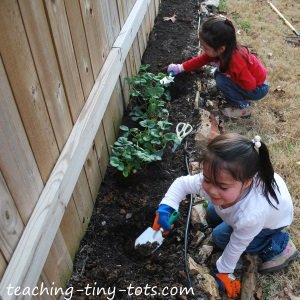
Children's Gloves, Small Shovel
Vegetable and Flower Soil
Choice of Plants
Small Watering Can or Garden Hose
Craft Sticks and Sharpie to Label Plants or use the labels that come with the plants.
Bucket to Carry Soil to each plant (optional)
Steps
- Create a list of herbs you would like to plant. Measure the area you will be planting in and make a simple map of your garden with the names of the plants you want so you can determine how many of each plant to purchase. See our tips below about location and spacing.
- We selected rosemary, thyme, sage, basil, oregano, dill and tarragon.
- Helpful tip: Print out pictures of the herbs you are going to buy and label them so your child can help identify them at the nursery. If your toddler is very young you can find the plant and show the picture and ask if it matches.
- Prepare the area to be planted prior to having your child assist. Clear weeds, rocks and check for unwanted critters.
- Write the names of the herbs to be planted on each craft stick or keep the little tag that comes with each plant.
- Many of the bagged soils contain fertilizers in them so it's important to have your child wear gloves and covered shoes for protection.
- Refer to your garden map and line up plants approximately where they will go. Great directional activity. I directed the girls to place them on the right or left or a certain plant.
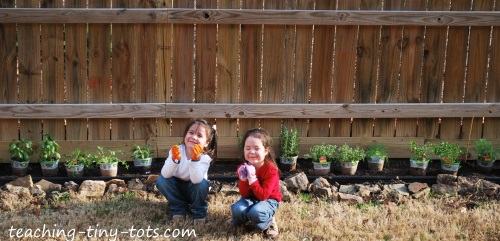
- Show your child how to use the shovel and have your child dig a hole for the plant. They will probably be able to dig only about half of the hole unless you have very loose, nice soil.
- Have your child smell the fragrance from each herb. Compare the strength of one versus another. Ex. Rosemary vs. Sage
- Release the plant from the pot by gently squeezing the plastic pot and turning the plant over. Gently pull the plant from the pot. Some herbs are now sold in biodegradable pots where you just remove the wrapper and plant the entire thing.
- Have Soil ready in bucket for your child to place around the plant.
- Place name marker in soil by plant.
- Water after planting and then water as recommended. Remember that over watering can be just as bad as under watering.
- Wash hands thoroughly!
Tips and Suggestions
- One of the most important factors for planting herbs is selecting the right location. Most herbs thrive in full sun as long as summer temperatures don't rise regularly above 90 degrees. If you have very hot summers, consider planting in and area that gets approximately four hours of sun. For planting Herbs, you need to plant them approximately 1 to 4 feet apart. Here are some general guidelines we found online: 3-4 feet - Rosemary, Sage, Mints, Oregano, Marjoram 2 feet - Basil, Thyme, Tarragon, Savory 1 foot - Cilantro, Chives, Dill, Parsley
- Prepare the area to be planted prior to the actual activity or you will find your children will be tired before you even begin!
- Borrow or buy a plant book so you can discuss what plants require (water, sunlight, and oxygen)
Other Ideas
Strawberries
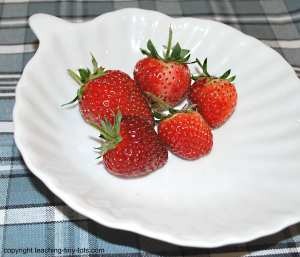
We added four strawberry plants, two different varieties. Within a week we had a couple small strawberries. As the season has progressed the strawberries are starting to grow bigger and more plentiful!! A tip we learned is to place crushed eggshells around the base of the plant to keep little slugs away from the fruit.
Blueberries
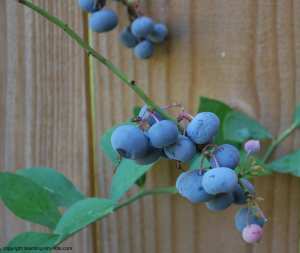
We planted two different varieties of blueberry bushes. We did a little research and found out it was important to plant two different varieties so it can cross pollinate. It normally takes two years before you get full sized berries so it was a nice surprise to see berries forming, growing and turning blue! After washing and cutting one open, we compared it to store bought blueberries and it looked identical so we took a taste test...it was sweet!
We planted two different varieties of blueberry bushes. We did a little research and found out it was important to plant two different varieties so it can cross pollinate. It normally takes two years before you get full sized berries so it was a nice surprise to see berries forming, growing and turning blue! After washing and cutting one open, we compared it to store bought blueberries and it looked identical so we took a taste test...it was sweet!
First Time Gardener?
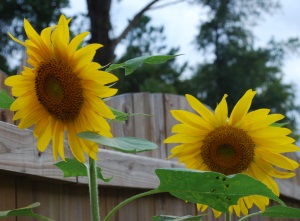
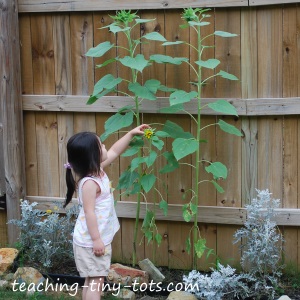
Sunflowers are great for first time gardeners. They are big seeds which make it easy to handle and they grow very fast with a stunning flower!
Out of the 4 seeds that we planted, three grew. Be sure to read on the back of the package for the description. I was amazed to find that the different varieties
varied greatly in height. We chose the 6-8 foot tall variety.
No Garden? How About Some Tabletop Plants
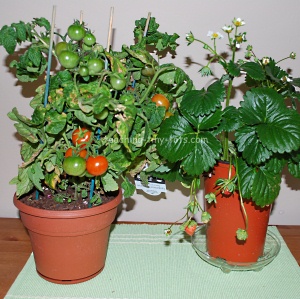
If you don't have a garden you could get a tabletop plant like these tomatoes and strawberries. These are easy to maintain and great for toddler science activities
like observing, counting and graphing.
The girls enjoyed picking them as they ripened and learned how to make a tally graph to count how many we had in all.
The girls enjoyed picking them as they ripened and learned how to make a tally graph to count how many we had in all.
Educational Tips
- Show your bottled spices next to the plants you purchase. Point out the fresh herbs at the grocery store.
- Give examples of some of their favorite foods that have spices in them. For example: Pizza sauce has oregano
Scientific Processes Used
Toddler Science ConceptsObservation
- Seeing the plants.
- Feeling the soil and plants
- Smelling the different herbs.
- Silent Showing how to dig a hole by demonstrating
- Oral Lots of verbal discussion when purchasing plants, learning about the different types and giving directions
- Pictorial Pictures of your garden plant and plants
- Measuring the area to be planted
- Sensory Comparisons Comparing the different scents and leaves
- Quantity Comparison How many of each plant purchased or how many in all
- Grouping by different types to be planted together
- Classifying Learning about herbs as a type of plant
Communication
Comparing
Organizing
Recent Articles


-
Paint a Pet Rock
 Paint your own Pet Rock
 -
Home Lunch Ideas for Kids
 Home lunch and Snack Ideas for Kids
 -
Dirt Cake for Parties
 Dirt Cake for Parties
 -
Carnival Games for Kids
 Carnival Games for Kids

Copyright© 2025 teaching-tiny-tots.com.